Cervical Cancer Overview
Clinical Information for Surgeons
Cervical cancer often develops without early warning signs. That's why regular screenings are essential.
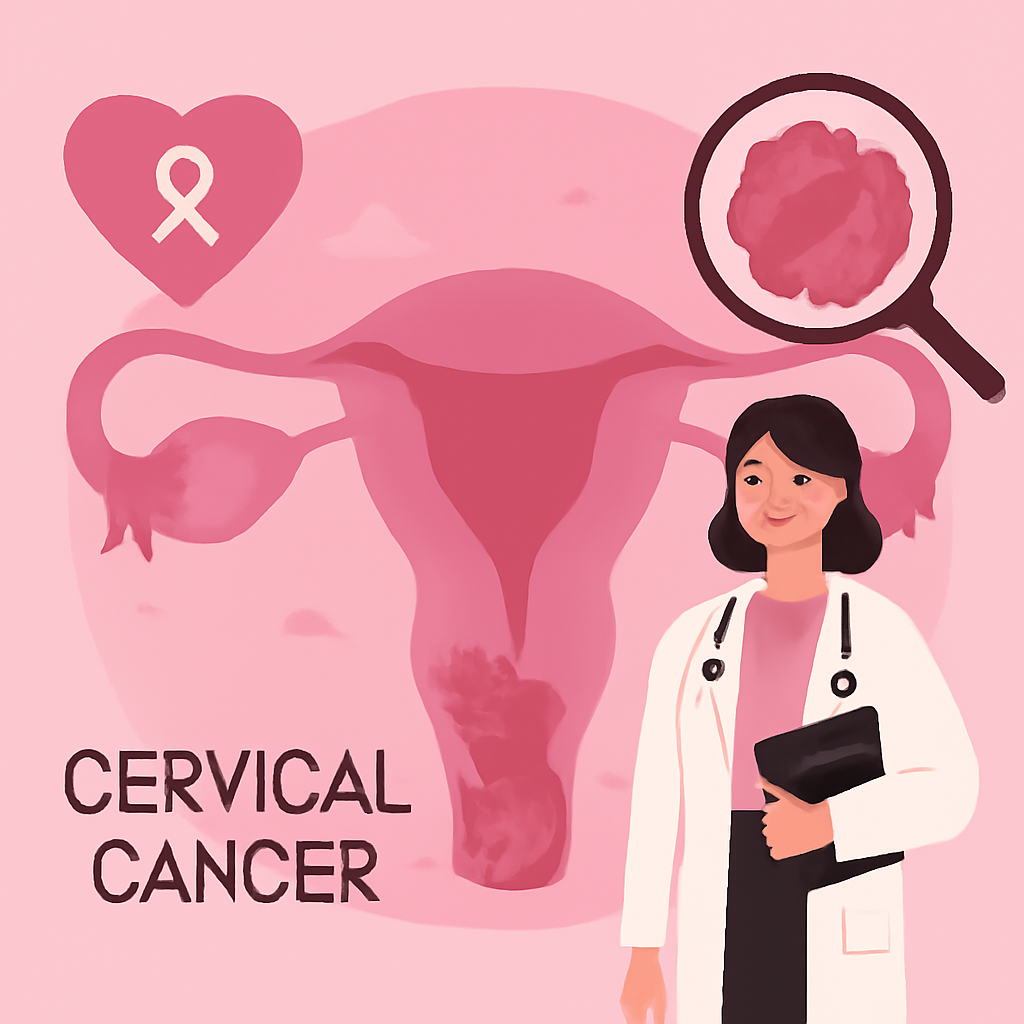
If a Pap test shows abnormal results, your doctor may recommend further tests.
Common Diagnostic Methods
Repeat Pap smear or liquid-based cytology
– to confirm abnormal cells
Biopsy
– a small tissue sample is removed and examined under a microscope
Colposcopy
– the cervix is examined with a lighted magnifying instrument; a biopsy may also be done
Endo-cervical curettage
– tissue is taken from the cervical canal with a spoon-shaped tool, then checked for abnormalities
Cone biopsy
– a larger tissue sample is removed to confirm diagnosis or as an early treatment to remove precancerous/cancerous cells
Additional Imaging Tests
If doctors suspect the cancer has spread, additional imaging tests may be ordered:
We consider:
Our goal is to treat the cancer while tailoring care to you.
1. Surgery (Often the First Step)
Cryosurgery
– freezing tissue to kill cancer cells
Cone biopsy (conization)
– removing a cone-shaped section of cervical tissue
LEEP (Loop Electrosurgical Excision Procedure)
– removing cancerous tissue with a thin wire loop carrying electrical current
Hysterectomy
– removing the uterus and cervix; may include nearby tissue and lymph nodes. Minimally invasive and robotic techniques are often used.
Total pelvic exenteration
– a rare, radical procedure for advanced cancer; involves removing reproductive organs. Reconstruction options available to help patients continue full lives.
2. Combination Treatments
In some cases, surgery may be combined with:
Radiation therapy
– high-energy rays to destroy cancer cells
Chemotherapy
– drugs to kill or stop the growth of cancer cells
Targeted or immunotherapy
– in specific cases, to boost effectiveness
3. Recovery & Support
Enhanced Recovery Programs
Enhanced recovery after surgery programs help you heal faster.
Multi-specialty Approach
Our oncologists collaborate with surgeons and specialists across different fields to create a comprehensive care plan.